Showing posts with label Sight seeing places. Show all posts

Monday, 15 September 2014

Krishnapuram Palace - Alappuzha

Krishnapuram Palace

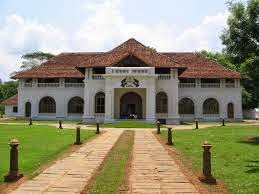
Kerala is noted for many palaces that were an outcome of princely domains that once ruled different parts of Kerala. The Krishnapuram Palace is one such palace, which could be reached from the National Highway - 47 going via Kayamkulam in Alappuzha district of Kerala. It is a historically important palace, located close to the Sree Krishnaswamy Temple at Krishnapuram. History reckons this double-storeyed palace as the one where the kings of Kayamkulam dynasty last stayed. It is a typical example of a palace design that is akin to that of local rulers in ancient Kerala.
Many ancillary units of Krishnapuram Palace got demolished and only the main palace structure remains intact. There are no authentic records stating the period of the palace's construction. According to old timers, the princess of Kayamkulam ruling family used to stay at a place north of Kayamkulam while the men stayed at the Krishnapuram Palace.
Currently a protected monument under the Department of Archaeology, the palace situated near the Krishnaswamy Temple at Krishnapuram was built during the period of King Anizham Thirunal Marthanda Varma (1729-1758 AD) following the annexation of Kayamkulam to the erstwhile princely state of Travancore.
The palace would easily catch the attention of its visitors, due to its traditional Kerala style of architecture. The architectural highlights of this palace include a courtyard, gabled roofs, thick-framed doors, narrow corridors and stairways, dormer windows and low roofs.
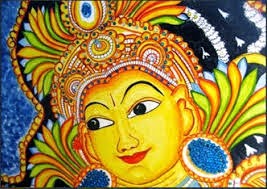
A highlight among the sights for visitors at the Krishnapuram Palace is without doubt the mural found here, depicting the story of Gajendramoksham (salvation of elephant). Dating back to the 18th century, this exquisite piece of art is one of the largest murals in Kerala and is a fantastic blend of colours and expression.
This magnificent palace with sixteen blocks is also famous for its museum that houses antiques, sculptures, paintings, weapons, megalithic remains, stone inscriptions, coins and artifacts in bronze. Among the museum highlights include a Bible in Sanskrit language.

Sunday, 14 September 2014

Pathiramanal - Alappuzha

Pathiramanal
Pathiramanal, a small island on the backwaters of Alappuzha, is a haven for hundreds of rare birds migrating from different parts of the world. You can reach there after 1 1/2 hours drive by motor boat or 30 minutes by speed boat from Alappuzha in south Kerala. Surrounded by the Vembanad Lake, stretching from Alappuzha to Kochi and the Kayamkulam lake, Pathiramanal is accessible only by boat.

The green island thus forms an ideal place for a break in the journey while on a backwater cruise. The mainland Alappuzha has a vast network of lakes, lagoons and fresh water rivers criss crossing it and is a district of immense natural beauty.

Pathiramanal is a beautiful island which also has many stories centered on it. Legends say that there was a young Brahmin who dived into the Vembanad Lake to perform his evening ablutions and the water made way for him and land rose to give shape to this beautiful island. The word Pathiramanal means sands of the night.

This little island Pathiramanal is away from the entire bustling city.  This island is the perfect getaway amidst the water, blue sky and acres of greenery. Serenity and tranquility are found at their best in the Parthimanal Island. 

This 10 acre island on the backwaters is home to many rare varieties of migratory birds from different parts of the world. The Best Time to Visit Pathiramanal is from June to January.


The island is a Birdwatcher's paradise. It is home to around 91 local species of birds and 50 migratory birds. One can see Pintail Ducks, Common Teal, Night Heron, Cormorant, Darter, Indian Shag, Purple Heron, gulls, terns, large egrets, Intermediate Egret, Cattle Egret, Indian Pond Heron, Little Egret, Pheasant-tailed and Bronze-winged Jacanas, Stork-billed Kingfisher, Watercock, Whistling Duck, Cotton Pygmy-Goose, Little Cormorant and Whiskered Tern. Some people have even reported seeing the Monarch flycatcher.

Friday, 12 September 2014

Houseboat
Kettuvalloms or Houseboats (Rice boats) are country boats that were used in the early days for the transport of goods from the isolated interior villages to the towns. With the advent of roads, bridges and ferry services, gradually the Kettuvalloms went off the scene.

Now these kettuvalloms are back again as a major tourist attraction. A ride on a Kettuvallom is a fabulous way to explore the fascinating beauty of the backwaters.

A house boat is about 67 feet in length and has a width of around 13 feet in the middle. The materials that go into the making are all local and Eco friendly bamboo poles, coconut fiber ropes, bamboo mats, coir carpets etc. The main wood used is "Anjili". The house boats have fully furnished single and double rooms with sundeck, private balcony with comfortable chairs, kitchen and toilet with WC. In addition there is also separate rest room for the crew. Traditional lanterns are used as lights. The crew includes a chef and two oarsmen.

The cuisine is traditional Kerala flavor with the local specialties; delicious fish and prawns. There are single bedroom houseboats for two people and two bedroom houseboats for four people.


In the backwaters of Kerala, nature is in its most pristine and sublime form and can truly transcend you to unknown depths of comfort. A cruise on the houseboats of Brightwater is an experience that is a fine blend of tradition and modern luxury, making your holidays a unique Kerala Experience.

Tuesday, 19 August 2014

Ambalappuzha Sri Krishna Temple - Alappuzha

Ambalappuzha Sri Krishna Temple
Ambalappuzha Sri Krishna Temple  is a Hindu temple in Ambalappuzha, Alapuzha district of Kerala, in south India.
The Ambalappuzha Sri Krishna Temple is believed to have been built during 15th – 17th AD by the local ruler Chembakasserry Pooradam Thirunal-Devanarayanan Thampuran.
The idol at Ambalapuzha is likened to Parthasarthi with a whip in the right hand and a Shankhu (sacred conch) in the left. This temple is directly associated to the Guruvayoor Sree Krishna Temple. During the raids of Tipu Sultan in 1789, the idol of Sri Krishna from the Guruvayoor Temple was brought to the Ambalappuzha Temple for safe keeping.
The payasam served in the Ambalappuzha Temple is famous among Hindu devotees. This sweet pudding made of rice and milk has an interesting mythological legend behind it.  It is believed that Guruvayoorappan reaches here daily at the time of Palpayasa Nedyam to have it.


An idol of Sri Krishna, The Lord Parthasarathy idol was installed in the temple.
The Aarattu festival commences with the flag hoisting ceremony on the Atham star in Meenam (March–April). The important Aarattu festival takes place on the Thiruvonam day of the same month. The aarattu ezhunnullathu starts from Erattakulangara Mahadeva Temple(The famous temple amongst one of the siva temples, facing to west)

Wednesday, 30 July 2014

Kodanad Elephant Training Center - Cochin

Kodanad Elephant Training Center - Cochin
Elephants are an integral part of Indian mythology and culture. In God's Own Country, elephants are often referred to as the sons of the 'Sahya' (the Western Ghats). Once a part of everyday life in Kerala, elephants are the most ornamental and auspicious animals here. No festival or celebration is complete without an elephant procession. Rows of majestically caparisoned elephants, replete with colorful silken parasols form the most spectacular part of any event in Kerala.
Kodanad Elephant Sanctuary  (Kodanad Elephant Training Center) is a rural riverside village in the Ernakulam district of the state of Kerala . Its a popular picnic spot and tourist destination in Kerala too. It is the only elephant rescue and training center in Kerala specialized for rescuing and training stranded adult and baby elephants from the forest regions across Kerala.
In the mornings at the riverside, tourists informally get a chance to experience hands-on bathe and massage of adult and baby elephants under the supervision of its Mahouts. Bathe and massage of elephants are normally done with small flat rocks, and husk of coconuts.
Kodanad offers elephant safari to the visitors at the main park. At the park, the old ‘Kraal’ is maintained to house elephants, which is a structure made of wood compartments that can accommodate up to 4 elephants.
Visitors to Kodanad Elephant sanctuary can watch feeding of elephants as nearly 80% of an elephant’s day is spent on feeding. It is fascinating to watch elephants feeding themselves in their natural environment
Watching baby elephants during their early training years of early life as it takes a lot of training in their early years. The facility is closed on Monday’s for tourists. There is also a ‘mini zoo’ that shelters wild animals which have become unfit for survival in the local forest and some inmates of the zoo are very rare species.
Watching kodanad baby elephants at their infancy and various stages of their growth has become a unique feature that attracts visitors to Kodanad. At least four to six baby elephants are brought in and trained every year. Tourists arrive at Kodanad fascinated by baby elephant’s various stages of development at the Care centre. Training plays an important role for elephants while their brains develop and they learn vital survival and cultural knowledge. The baby elephants at Kodanad are owned and taken care by the Department of Forest. Once they become adults, someone buy them out in auctions. In Kerala, elephants are used for a variety of traditional jobs such as timber loading & wood moving, or as temple elephants for religious Hindu festivals & events.
Kodanad, set on the Southern banks of the Periyar River amid the beautiful high ranges near Perumbavoor, is one of the largest elephant training centers in Kerala. Earlier elephants captured from the Malayatoor forests (the forests in the East and North of Kodanad) were trained here. Since the introduction of a ban on elephant capture Kodanad has been reduced to a training centre. The famous Malayatoor Church is near Kodanad.   Muthanga of Wayanad district and Konni of Pathanamthitta district are two other elephant training centers in Kerala. Another attraction for elephant lovers is Punnathur Kotta, of the neighbouring Thrissur district, where some 40 elephants of the Guruvayoor Temple are groomed.
Thursday, 17 July 2014

Museum of Kerala History -Cochin

Museum of Kerala History
Museum of Kerala History is important scenes of Kerala history are portrayed through sculptures. Greeting the visitor outside the museum is a statue of Parasurama, the mythological sage who is said to have created Kerala.
A museum for understanding the history of Kerala and that too born out of an individual's efforts is among the few in India. The Art and History Museum complex has been the realization of Mr. R. Madhavan Nayar (1914-1996), a prominent industrialist and philanthropist. His passion for arts eventually led him to the establishment of the various units established under the Art and History Museums, which is currently managed by the Madhavan Nayar Foundation.
The Art and History Museum complex at Edappally in Kochi comprises Museum of Kerala History; Museum of Paintings and Sculptures, Museum of Indian Miniatures, Dolls' Museum and Centre for Visual Arts.
Housed in a circular domed building, the Museum of Kerala History is a sound and light spectacle. It works on a time frame, portraying the history of Kerala from early inhabitants to the modern era. Here one would come 38 life-size tableaux, each backed by multiple visuals, reflecting the cultural and social history of Kerala. This presentation is considered as the first of its kind in India.
With over 200 original paintings and 30 odd sculptures by well known Indian artists, this museum unit is spread over three floors. Some of the noted Indian artists whose works are on display here include that of Ravi Varma, M. F. Hussain, F. N. Souza, Jamini Roy, Kishen Khanna and Nandalal Bose. This museum has among its displayed items a mural painting based on the Classical Sanskrit drama Shakuntalam, done in the traditional Kerala mural style. It is 25 ft. long by 5 ft. wide and is one of the largest in Kerala, noted for its fine attention to details.
Featuring reproductions of Indian miniature art, the Museum of Indian Miniatures is yet another attraction at the Art and History Museum complex. Devoted exclusively to miniatures, the works are of Indian artists trained by Persian masters in the latter half of the 16th century during the reign of Emperor Akbar.
And in the Dolls' Museum, visitors would be greeted by a wide range of Indian dolls. This museum has a collection of about a hundred and fifty hand-crafted dolls. The dolls represent young men and women, from Gujarat to Nagaland and from Kashmir to Kanyakumari. There are brides and bridegrooms from various Indian states; dance figures representing the rich repertoire of Indian classical dances as well as folk dances in groups.
Another interesting part of the museum complex is the Centre for Visual Arts that houses about 500 reproductions of world's renowned painters like Leonardo da Vinci, Monet, Cezanne, Van Gogh etc. Among the other attractions here are the huge reliefs of ancient India's sculptural masterpieces like Yakshi of Didarganj, Dwarapalaka (Ajanta) and the Woman and Parrot.
Part of the Art and Museum complex is the Projection Studio. Here screening of visuals and specialized art related subjects to interested visitors and students of art are held. It has a CD collection worth 72 hours of projection time.

Tuesday, 15 July 2014

Marine Drive - Cochin

Marine Drive is a picturesque promenade in Kochi. It is built facing the backwaters, and is a popular hangout for the local populace. Marine Drive is also an economically thriving part of the city of Kochi. With several shopping malls it is as an important centre of shopping activity in Kochi. The view of the setting and rising sun over the sea mouth, and the gentle breeze from the Vembanad Lake has made Marine Drive an important tourist destination in Kochi. Hundreds of people (both natives, and tourists) throng the walkway during the evenings.

Marine Drive in Kochi, is a popular hangout and this scenic stretch offers a spectacular view of the backwaters and the Kochi Harbour. The Rainbow Bridge and the International Tourism Boat Jetty Complex are other attractions here.The walkway is usually thronged by people in the evening and the view of the sun setting in the tranquil sea. At night, the place provides a picturesque spectacle with the light seeping out of the anchored ships. The cleanliness, sitting arrangements and the cool breeze from the backwaters are the other factors that draw tourists here.
The beauty of the place has been enhanced by two contemporary constructions – the Rainbow Bridge and the Chinese Fishing Net Bridge.  Childrens’ Park and Subhash Chandra Bose Park are also situated near Marine Drive.  There are various boat services from Marine Drive to take you to tourist spots like the oil tanker berth, the Cochin shipyard, the Bolgatty Palace, Mattanchery Jewish synagogue, Jew Street, Vallarpadom Terminal and so on. 

Marine Drive, with its many skyscrapers and shopping malls, is one of the commercially thriving areas of Cochin. Corporate offices, quality restaurants, showrooms for international names and so, on have found secured their place in the buildings adjacent to the walkway. Apart from being a shopping destination, Marine Drive has a number of apartments that are much in demand.
The boat jetty that operates ferry services to various islands is situated near Marine Drive. 

Monday, 14 July 2014

Jewish Synagogue -Cochin

Jewish Synagogue
Jewish Synagogue or the Paradesi Synagogue is the oldest synagogue in the Commonwealth of Nations, located in Kochi in South India. It was built in 1568 by the Malabar Yehudan people or Cochin Jewish community in the Kingdom of Cochin. It is also referred to as the Cochin Jewish Synagogue or the Mattancherry Synagogue. The synagogue is located in the quarter of Old Cochin known as Jew Town, and is the only one of the seven synagogues in the area still in use. The complex has four buildings. It was built adjacent to the Mattancherry Palace temple on the land given to the Malabari Yehuden community by the Raja of Kochi, Rama Varma. The Mattancherry Palace temple and the Mattancherry synagogue share a common wall.
The Paradesi Synagogue, in a corner of Jew Town, is more than a hundred years old and houses many rare antiques.  The synagogue that woos many visitors, add to the quaint charm of Mattancherry.  The synagogue, the oldest in the Commonwealth, was built by the Jewish community of Cochin. In 1662, it was destroyed by the Portguese and then reconstructed, two years later, by the Dutch.
The word Paradesi means foreigner in many Indian languages. It refers to the White Jews - A mixture of Jews from Kodungalloor, Middle East and Europe.
Enter the synagogue and the large main hall arrests your attention with display of rare antique objects that add to the grandeur of the place. The light falling through the large open windows make the sight of chandeliers and lamps more delightful. These glass chandeliers dangling from the ceiling belong to the 19th century and were imported from Belgium.
The floor of the synagogue itself is a showpiece with the paving of hand-painted blue willow patterned floor tiles. These ceramic tiles were brought from Canton, China in the 18th century by Ezekiel Rahabi, a renowned Jewish businessman. Each tile is different from one another in its design and it never fails to capture the admiration of the visitors. The marvellous construction of the synagogue is revealed in all its features including the splendid pillars.
A pulpit with brass rails is built in the center of the room. An exclusive gallery for women with gilt columns, a carved teak ark etc can be seen in the synagogue.  The teak Ark houses four scrolls of Torah (the first five books of Old Testament) and they are encased in silver and gold. Two gold crowns presented to the Jewish Community by the Kings of Kochi and Travancore are also kept here.
Another valuable possession of the synagogue is the copper plates belonging to the 4th century with inscriptions in Malayalam. The inscriptions describe the privileges granted to the community by the erstwhile Cochin king. It is written in kannadiyezhuthu script or mirror image writing. An oriental rug gifted to the Jews by the last Ethiopian Emperor, Haile Selassie is also kept in the synagogue. 

Sunday, 13 July 2014

Mattancherry Palace (Dutch Palace) -Cochin

Mattancherry Palace
Mattancherry Palace, also known as the Dutch Palace, in Mattancherry, Kochi, features Kerala murals depicting Hindu temple art, portraits and exhibits of the Rajas of Kochi.Mattancherry Palace with its medieval charm is situated at Palace Road, Mattancherry, Kochi. It was built by the Portuguese and presented to Veera Kerala Varma (1537–65), Raja of Kochi, in 1555 AD.
 The palace is a quadrangular structure built in Nālukettu style, the traditional Kerala style of architecture, with a courtyard in the middle. In the courtyard there stands a small temple dedicated to 'Pazhayannur Bhagavati', the protective goddess of the Kochi royal family. There are two more temples on either side of the Palace, one dedicated to Lord Krishna and the other to Lord Siva. Certain elements of architectures, as for example the nature of its arches and the proportion of its chambers are indicative of European influence in basic Nāluketttu style.
The double storeyed palace building which stands by the panoramic Kochi backwaters has an exquisite collection of murals collectively covering over 300 sq ft of its walls. The themes of these murals have been borrowed from the great Indian epics - the Ramayana and the Mahabharatha, and mythology and legends about the Hindu gods especially Guruvayurappan. Some murals depict scenes from Kumarasambhavam and other works of the great Sanskrit poet Kalidasa.
The present museum was established in May 1985 housing a variety of exhibits such as portraits of the Cochin Kings, palanquins, dresses, weapons, three royal umbrellas, canopy, dolis, swords, stamps and coins etc.
The ceremonial dress of the kings with intricate lace work in golden thread woven into them is in display. Also in display are royal caps worn by the Cochin kings. The coins issued by the kings of Cochin and postal stamps are exhibited besides important plans of Cochin drawn by the Dutch in the 17th and 18th centuries.
Also on display are royal paraphernalia like weapons, swings and furniture which offer a glimpse of the lifestyle of the royal family.
Mattancherry palace is located at a distance of 12 km from Ernakulam (Cochin) in Kerala State. The nearest airport is Nedumbaserry international airport. Mattancherry palace is one of the oldest examples of the Portuguese architecture with oriental influence and is unique from the historical and architectural point of view.

Hill Palace

Hill Palace
Hill palace  is the largest archaeological museum in Kerala, noted for royal collections of the erstwhile Maharaja of Kochi. 
Built in 1865, the palace complex consists of 49 buildings in the traditional architectural style of Kerala, sprawled over 52 acres of beautifully landscaped terraced land which houses a deer park and facilities for horse riding.
It is famous for the precious collection Cochin royal family.  The 1st building in the Palace is constructed in the Ettukettu model (Kerala style).
Numerous species of flora including rare medicinal plants grow here. On display in the full-fledged Ethno-archaeological museum are oil-paintings, murals, sculptures in stone and manuscripts, inscriptions, coins, belongings of the Kochi royal family and royal furniture including the precious gold crown fixed with the precious stones and Simhasana (throne) of the Cochin Raja.
Also exhibited are over 200 antique pieces of pottery and ceramic vases from Japan and China, Kudakkallu (tomb stone), Thoppikkallu (hood stone), menhirs, granite, laterite memorials, rock-cut weapons from the Stone Age, wooden temple models, plaster cast models of objects from Mohenjodaro and Harappa of the Indus Valley Civilisation. The museum also houses a gallery of contemporary art.