Showing posts with label palace. Show all posts

Monday, 15 September 2014

Krishnapuram Palace - Alappuzha

Krishnapuram Palace

Kerala is noted for many palaces that were an outcome of princely domains that once ruled different parts of Kerala. The Krishnapuram Palace is one such palace, which could be reached from the National Highway - 47 going via Kayamkulam in Alappuzha district of Kerala. It is a historically important palace, located close to the Sree Krishnaswamy Temple at Krishnapuram. History reckons this double-storeyed palace as the one where the kings of Kayamkulam dynasty last stayed. It is a typical example of a palace design that is akin to that of local rulers in ancient Kerala.
Many ancillary units of Krishnapuram Palace got demolished and only the main palace structure remains intact. There are no authentic records stating the period of the palace's construction. According to old timers, the princess of Kayamkulam ruling family used to stay at a place north of Kayamkulam while the men stayed at the Krishnapuram Palace.
Currently a protected monument under the Department of Archaeology, the palace situated near the Krishnaswamy Temple at Krishnapuram was built during the period of King Anizham Thirunal Marthanda Varma (1729-1758 AD) following the annexation of Kayamkulam to the erstwhile princely state of Travancore.
The palace would easily catch the attention of its visitors, due to its traditional Kerala style of architecture. The architectural highlights of this palace include a courtyard, gabled roofs, thick-framed doors, narrow corridors and stairways, dormer windows and low roofs.
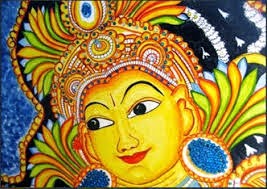
A highlight among the sights for visitors at the Krishnapuram Palace is without doubt the mural found here, depicting the story of Gajendramoksham (salvation of elephant). Dating back to the 18th century, this exquisite piece of art is one of the largest murals in Kerala and is a fantastic blend of colours and expression.
This magnificent palace with sixteen blocks is also famous for its museum that houses antiques, sculptures, paintings, weapons, megalithic remains, stone inscriptions, coins and artifacts in bronze. Among the museum highlights include a Bible in Sanskrit language.

Sunday, 13 July 2014

Mattancherry Palace (Dutch Palace) -Cochin

Mattancherry Palace
Mattancherry Palace, also known as the Dutch Palace, in Mattancherry, Kochi, features Kerala murals depicting Hindu temple art, portraits and exhibits of the Rajas of Kochi.Mattancherry Palace with its medieval charm is situated at Palace Road, Mattancherry, Kochi. It was built by the Portuguese and presented to Veera Kerala Varma (1537–65), Raja of Kochi, in 1555 AD.
 The palace is a quadrangular structure built in Nālukettu style, the traditional Kerala style of architecture, with a courtyard in the middle. In the courtyard there stands a small temple dedicated to 'Pazhayannur Bhagavati', the protective goddess of the Kochi royal family. There are two more temples on either side of the Palace, one dedicated to Lord Krishna and the other to Lord Siva. Certain elements of architectures, as for example the nature of its arches and the proportion of its chambers are indicative of European influence in basic Nāluketttu style.
The double storeyed palace building which stands by the panoramic Kochi backwaters has an exquisite collection of murals collectively covering over 300 sq ft of its walls. The themes of these murals have been borrowed from the great Indian epics - the Ramayana and the Mahabharatha, and mythology and legends about the Hindu gods especially Guruvayurappan. Some murals depict scenes from Kumarasambhavam and other works of the great Sanskrit poet Kalidasa.
The present museum was established in May 1985 housing a variety of exhibits such as portraits of the Cochin Kings, palanquins, dresses, weapons, three royal umbrellas, canopy, dolis, swords, stamps and coins etc.
The ceremonial dress of the kings with intricate lace work in golden thread woven into them is in display. Also in display are royal caps worn by the Cochin kings. The coins issued by the kings of Cochin and postal stamps are exhibited besides important plans of Cochin drawn by the Dutch in the 17th and 18th centuries.
Also on display are royal paraphernalia like weapons, swings and furniture which offer a glimpse of the lifestyle of the royal family.
Mattancherry palace is located at a distance of 12 km from Ernakulam (Cochin) in Kerala State. The nearest airport is Nedumbaserry international airport. Mattancherry palace is one of the oldest examples of the Portuguese architecture with oriental influence and is unique from the historical and architectural point of view.

Friday, 11 July 2014

Bolgatty Palace - Cochin

Bolgatty Palace

Bolgatty Palace is located on the island popularly known as Bolgatty Island in Cochin. Bolgaaty palace is built by the Dutch. One of the oldest existing Dutch palaces outside Holland, this quaint mansion, built in 1744 by Dutch traders.


The building was then the Governor palace for the commander of Dutch Malabar and later in 1909 was leased to the British. It served as the home of the British Governors, being the seat of the British resident of Cochin during the British regime.


In 1947, when India obtained independence, the palace became the property of the state and was later converted into a heritage hotel resort. It is encircled by a nine-hole golf course established in 1923.


Bolgatty Palace now has a swimming pool, Ayurvedic Centre and daily Kathakali performances and is a holiday destination for Indian and overseas tourists. 


Bolgatty Palace faces straight to the estuary of Vembanad backwaters and it is also close to the international marina. 

Sunday, 6 July 2014

Padmanabhapuram Palace -Thiruvanathapuram

Padmanabhapuram Palace 

The Majestic old wooden palace is situated Thuchlai, 63 kms from Thiruvanathapuram on the way to Kanyakumari. 

The antique interiors are replete with intricate rosewood carvings and sculptured decor. The palace also contains 17th and 18th century murals. One can see: the musical bow in mahogany, windows with colored mica, royal chairs with Chinese carvings, 'Thaikkottaram' or the Queen Mother's palace with painted ceilings, rose wood and teak carved ceilings with 90 different floral designs. 

Durbar Hall of the palace has a with shiny black floor specially made from a combination of egg white, jaggery lime, burnt coconut, charcoal and river sand, granite tubs to cool curd and buttermilk, secret underground passage, the King's bedroom with a four poster medicinal bed, mural paintings, pictures of Lord Krishna, hanging brass lanterns lit continuously since 18th century, open air swimming bath, granite dance hall, Saraswathi temple, large earthen urns, room for scribes and accountants, carved figures on columns holding oil lamps, pooja )worship) rooms with jackfruit tree columns, fish carvings on ceilings, enormous teak beams, Belgian mirrors and an outer cyclopean stone wall fitted together without mortar. 

This palace was once the capital of the State of Travancore. The palace is built in the Travancore architectural style. This is famous for its 17th and 18th century murals, carved mahogany ceiling, colored mica windows, secret underground passages, inner courtyards, durbal hall, museum, four poster medicinal bed, Belgian mirror, pictures of Lord Krishna, granite dance halls and special black shiny floors which are made from a unique combination of egg white, jaggery, lime, burnt coconut, charcoal and river sand. 


Padmanabhapuram palace is very important milestone in Kerala history.

Friday, 23 May 2014

Sakthan Thampuran Palace - Thrissur


Sakthan Thamupuran Palace

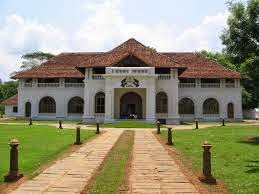
The Thrissur Sakthan Thampuran Palace is an important land mark in the Town and also has much historical significance.  This is a major tourist attraction and all history lovers will definitely want to go through this magnificent piece of historical significance.  This is the one of the cultural and architectural important palace of the erstwhile Maharaja of Cochin has been converted into a heritage museum. 


The great ruler Raja Rama Varma built Thrissur Shakthan Thampuran Palace. This place is a blend of traditional Kerala and Dutch architectural style. The palace has maily two stories and a traditional Kerala Naalukettu. The palace is marked by high roofs, thick walls, large rooms and Italian marble floorings.


The construction and interiors are done so tastefully and comfortably that it remains cozy irrespective of weather conditions. There is a snake temple inside the complex. This museum has the largest collection of excavated megalithic material in Kerala.


We can also find very good ancient Coins; the galleries depict the treasury, royal bedroom, the royal kitchen utensils, displays of bronzes, weapons and stamps.  A botanical garden situated near the Sakthan Thampuran Palace. There is also medicinal plants garden with an indigenous and exotic collection of plants.