Thursday, 17 July 2014

Museum of Kerala History -Cochin

Museum of Kerala History
Museum of Kerala History is important scenes of Kerala history are portrayed through sculptures. Greeting the visitor outside the museum is a statue of Parasurama, the mythological sage who is said to have created Kerala.
A museum for understanding the history of Kerala and that too born out of an individual's efforts is among the few in India. The Art and History Museum complex has been the realization of Mr. R. Madhavan Nayar (1914-1996), a prominent industrialist and philanthropist. His passion for arts eventually led him to the establishment of the various units established under the Art and History Museums, which is currently managed by the Madhavan Nayar Foundation.
The Art and History Museum complex at Edappally in Kochi comprises Museum of Kerala History; Museum of Paintings and Sculptures, Museum of Indian Miniatures, Dolls' Museum and Centre for Visual Arts.
Housed in a circular domed building, the Museum of Kerala History is a sound and light spectacle. It works on a time frame, portraying the history of Kerala from early inhabitants to the modern era. Here one would come 38 life-size tableaux, each backed by multiple visuals, reflecting the cultural and social history of Kerala. This presentation is considered as the first of its kind in India.
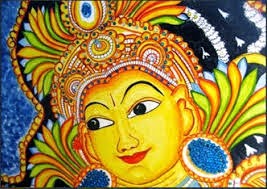
With over 200 original paintings and 30 odd sculptures by well known Indian artists, this museum unit is spread over three floors. Some of the noted Indian artists whose works are on display here include that of Ravi Varma, M. F. Hussain, F. N. Souza, Jamini Roy, Kishen Khanna and Nandalal Bose. This museum has among its displayed items a mural painting based on the Classical Sanskrit drama Shakuntalam, done in the traditional Kerala mural style. It is 25 ft. long by 5 ft. wide and is one of the largest in Kerala, noted for its fine attention to details.
Featuring reproductions of Indian miniature art, the Museum of Indian Miniatures is yet another attraction at the Art and History Museum complex. Devoted exclusively to miniatures, the works are of Indian artists trained by Persian masters in the latter half of the 16th century during the reign of Emperor Akbar.
And in the Dolls' Museum, visitors would be greeted by a wide range of Indian dolls. This museum has a collection of about a hundred and fifty hand-crafted dolls. The dolls represent young men and women, from Gujarat to Nagaland and from Kashmir to Kanyakumari. There are brides and bridegrooms from various Indian states; dance figures representing the rich repertoire of Indian classical dances as well as folk dances in groups.
Another interesting part of the museum complex is the Centre for Visual Arts that houses about 500 reproductions of world's renowned painters like Leonardo da Vinci, Monet, Cezanne, Van Gogh etc. Among the other attractions here are the huge reliefs of ancient India's sculptural masterpieces like Yakshi of Didarganj, Dwarapalaka (Ajanta) and the Woman and Parrot.
Part of the Art and Museum complex is the Projection Studio. Here screening of visuals and specialized art related subjects to interested visitors and students of art are held. It has a CD collection worth 72 hours of projection time.

Tuesday, 15 July 2014

Marine Drive - Cochin

Marine Drive is a picturesque promenade in Kochi. It is built facing the backwaters, and is a popular hangout for the local populace. Marine Drive is also an economically thriving part of the city of Kochi. With several shopping malls it is as an important centre of shopping activity in Kochi. The view of the setting and rising sun over the sea mouth, and the gentle breeze from the Vembanad Lake has made Marine Drive an important tourist destination in Kochi. Hundreds of people (both natives, and tourists) throng the walkway during the evenings.

Marine Drive in Kochi, is a popular hangout and this scenic stretch offers a spectacular view of the backwaters and the Kochi Harbour. The Rainbow Bridge and the International Tourism Boat Jetty Complex are other attractions here.The walkway is usually thronged by people in the evening and the view of the sun setting in the tranquil sea. At night, the place provides a picturesque spectacle with the light seeping out of the anchored ships. The cleanliness, sitting arrangements and the cool breeze from the backwaters are the other factors that draw tourists here.
The beauty of the place has been enhanced by two contemporary constructions – the Rainbow Bridge and the Chinese Fishing Net Bridge.  Childrens’ Park and Subhash Chandra Bose Park are also situated near Marine Drive.  There are various boat services from Marine Drive to take you to tourist spots like the oil tanker berth, the Cochin shipyard, the Bolgatty Palace, Mattanchery Jewish synagogue, Jew Street, Vallarpadom Terminal and so on. 

Marine Drive, with its many skyscrapers and shopping malls, is one of the commercially thriving areas of Cochin. Corporate offices, quality restaurants, showrooms for international names and so, on have found secured their place in the buildings adjacent to the walkway. Apart from being a shopping destination, Marine Drive has a number of apartments that are much in demand.
The boat jetty that operates ferry services to various islands is situated near Marine Drive. 

Monday, 14 July 2014

Jewish Synagogue -Cochin

Jewish Synagogue
Jewish Synagogue or the Paradesi Synagogue is the oldest synagogue in the Commonwealth of Nations, located in Kochi in South India. It was built in 1568 by the Malabar Yehudan people or Cochin Jewish community in the Kingdom of Cochin. It is also referred to as the Cochin Jewish Synagogue or the Mattancherry Synagogue. The synagogue is located in the quarter of Old Cochin known as Jew Town, and is the only one of the seven synagogues in the area still in use. The complex has four buildings. It was built adjacent to the Mattancherry Palace temple on the land given to the Malabari Yehuden community by the Raja of Kochi, Rama Varma. The Mattancherry Palace temple and the Mattancherry synagogue share a common wall.
The Paradesi Synagogue, in a corner of Jew Town, is more than a hundred years old and houses many rare antiques.  The synagogue that woos many visitors, add to the quaint charm of Mattancherry.  The synagogue, the oldest in the Commonwealth, was built by the Jewish community of Cochin. In 1662, it was destroyed by the Portguese and then reconstructed, two years later, by the Dutch.
The word Paradesi means foreigner in many Indian languages. It refers to the White Jews - A mixture of Jews from Kodungalloor, Middle East and Europe.
Enter the synagogue and the large main hall arrests your attention with display of rare antique objects that add to the grandeur of the place. The light falling through the large open windows make the sight of chandeliers and lamps more delightful. These glass chandeliers dangling from the ceiling belong to the 19th century and were imported from Belgium.
The floor of the synagogue itself is a showpiece with the paving of hand-painted blue willow patterned floor tiles. These ceramic tiles were brought from Canton, China in the 18th century by Ezekiel Rahabi, a renowned Jewish businessman. Each tile is different from one another in its design and it never fails to capture the admiration of the visitors. The marvellous construction of the synagogue is revealed in all its features including the splendid pillars.
A pulpit with brass rails is built in the center of the room. An exclusive gallery for women with gilt columns, a carved teak ark etc can be seen in the synagogue.  The teak Ark houses four scrolls of Torah (the first five books of Old Testament) and they are encased in silver and gold. Two gold crowns presented to the Jewish Community by the Kings of Kochi and Travancore are also kept here.
Another valuable possession of the synagogue is the copper plates belonging to the 4th century with inscriptions in Malayalam. The inscriptions describe the privileges granted to the community by the erstwhile Cochin king. It is written in kannadiyezhuthu script or mirror image writing. An oriental rug gifted to the Jews by the last Ethiopian Emperor, Haile Selassie is also kept in the synagogue. 

Sunday, 13 July 2014

Mattancherry Palace (Dutch Palace) -Cochin

Mattancherry Palace
Mattancherry Palace, also known as the Dutch Palace, in Mattancherry, Kochi, features Kerala murals depicting Hindu temple art, portraits and exhibits of the Rajas of Kochi.Mattancherry Palace with its medieval charm is situated at Palace Road, Mattancherry, Kochi. It was built by the Portuguese and presented to Veera Kerala Varma (1537–65), Raja of Kochi, in 1555 AD.
 The palace is a quadrangular structure built in Nālukettu style, the traditional Kerala style of architecture, with a courtyard in the middle. In the courtyard there stands a small temple dedicated to 'Pazhayannur Bhagavati', the protective goddess of the Kochi royal family. There are two more temples on either side of the Palace, one dedicated to Lord Krishna and the other to Lord Siva. Certain elements of architectures, as for example the nature of its arches and the proportion of its chambers are indicative of European influence in basic Nāluketttu style.
The double storeyed palace building which stands by the panoramic Kochi backwaters has an exquisite collection of murals collectively covering over 300 sq ft of its walls. The themes of these murals have been borrowed from the great Indian epics - the Ramayana and the Mahabharatha, and mythology and legends about the Hindu gods especially Guruvayurappan. Some murals depict scenes from Kumarasambhavam and other works of the great Sanskrit poet Kalidasa.
The present museum was established in May 1985 housing a variety of exhibits such as portraits of the Cochin Kings, palanquins, dresses, weapons, three royal umbrellas, canopy, dolis, swords, stamps and coins etc.
The ceremonial dress of the kings with intricate lace work in golden thread woven into them is in display. Also in display are royal caps worn by the Cochin kings. The coins issued by the kings of Cochin and postal stamps are exhibited besides important plans of Cochin drawn by the Dutch in the 17th and 18th centuries.
Also on display are royal paraphernalia like weapons, swings and furniture which offer a glimpse of the lifestyle of the royal family.
Mattancherry palace is located at a distance of 12 km from Ernakulam (Cochin) in Kerala State. The nearest airport is Nedumbaserry international airport. Mattancherry palace is one of the oldest examples of the Portuguese architecture with oriental influence and is unique from the historical and architectural point of view.

Hill Palace

Hill Palace
Hill palace  is the largest archaeological museum in Kerala, noted for royal collections of the erstwhile Maharaja of Kochi. 
Built in 1865, the palace complex consists of 49 buildings in the traditional architectural style of Kerala, sprawled over 52 acres of beautifully landscaped terraced land which houses a deer park and facilities for horse riding.
It is famous for the precious collection Cochin royal family.  The 1st building in the Palace is constructed in the Ettukettu model (Kerala style).
Numerous species of flora including rare medicinal plants grow here. On display in the full-fledged Ethno-archaeological museum are oil-paintings, murals, sculptures in stone and manuscripts, inscriptions, coins, belongings of the Kochi royal family and royal furniture including the precious gold crown fixed with the precious stones and Simhasana (throne) of the Cochin Raja.
Also exhibited are over 200 antique pieces of pottery and ceramic vases from Japan and China, Kudakkallu (tomb stone), Thoppikkallu (hood stone), menhirs, granite, laterite memorials, rock-cut weapons from the Stone Age, wooden temple models, plaster cast models of objects from Mohenjodaro and Harappa of the Indus Valley Civilisation. The museum also houses a gallery of contemporary art.

Saturday, 12 July 2014

Willingdon Island - Cochin

Willingdon Island

Willingdon Island is a man-made island that was created in 1933, named after lord Willingdon a former British viceroy to India. Cochin harbor, Southern naval command, best hotels in the city, port trust head quarters, major trading centers etc are situated at Willingdon Island. 

The island is made by sand that was dredged while deepening the backwaters for the Cochin port. Sir Robert Bristow was the man that in charge of this endeavor.

Willingdon Island is connected to Kochi's mainland by road and the railway Venduruthy Bridge. 


When the British withdrew from India after independence in 1947, they left behind an indispensable and significant transport hub. During its short colonial tenure, the Wellingdon Island in Cochin handled almost one million tons of freight and by the year 1960, the traffic had almost doubled.


It is a major artificial port in India and serves as a major landmark in the Kochi city of Kerala. The Wellington Island also serves as a link between the city and some other seaports of the world.

Friday, 11 July 2014

Bolgatty Palace - Cochin

Bolgatty Palace

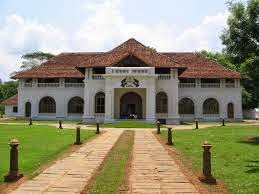
Bolgatty Palace is located on the island popularly known as Bolgatty Island in Cochin. Bolgaaty palace is built by the Dutch. One of the oldest existing Dutch palaces outside Holland, this quaint mansion, built in 1744 by Dutch traders.


The building was then the Governor palace for the commander of Dutch Malabar and later in 1909 was leased to the British. It served as the home of the British Governors, being the seat of the British resident of Cochin during the British regime.


In 1947, when India obtained independence, the palace became the property of the state and was later converted into a heritage hotel resort. It is encircled by a nine-hole golf course established in 1923.


Bolgatty Palace now has a swimming pool, Ayurvedic Centre and daily Kathakali performances and is a holiday destination for Indian and overseas tourists. 


Bolgatty Palace faces straight to the estuary of Vembanad backwaters and it is also close to the international marina.